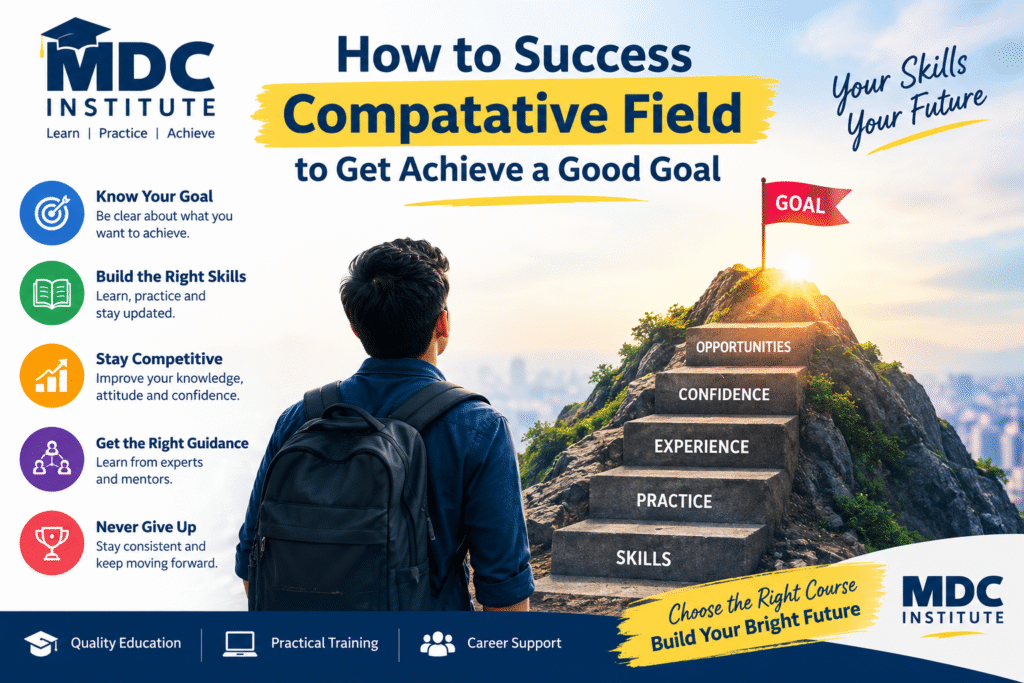
How to success compatative field to get achive a good goal
Course / Skill Area | Core Technologies Covered | Key Career Roles | Typical Entry-Level Fit |
1. AI & Machine Learning Engineering | Python, PyTorch, Generative AI APIs, LangChain, Model Deployment | AI Developer, Prompt Engineer, ML Specialist | Coders, Software Engineers |
2. Cybersecurity & Ethical Hacking | Network Security, SOC, Penetration Testing, Cloud Security | Cybersecurity Analyst, SOC Analyst, Security Consultant | IT/Network Support Professionals |
3. Data Science & Data Analytics | Python, SQL, Tableau, Power BI, Excel | Data Analyst, BI Analyst, Data Specialist | Beginners, Non-tech backgrounds |
4. Cloud Computing (AWS / Azure) | AWS, Azure, Cloud Architecture, Serverless Infrastructure | Cloud Engineer, Cloud Solutions Architect | System Administrators, IT Admins |
5. DevOps & MLOps | Docker, Kubernetes, Jenkins, CI/CD, Infrastructure-as-Code | DevOps Engineer, SRE (Site Reliability Engineer) | Experienced Developers, IT Pros |
6. Full Stack Web Development | React, Node.js, Express, MongoDB/SQL, JavaScript | Full Stack Developer, Software Engineer | Logic-oriented Beginners, Coders |
7. UI/UX Design & Product Design | Figma, Prototyping, Wireframing, User Research | UI/UX Designer, Product Designer | Creative thinkers, Visual Designers |
8. Digital Marketing & AI Marketing | SEO, Google Ads, Performance Marketing, Content Strategy | Digital Marketing Specialist, SEO Manager | Beginners, Non-coders, Freelancers |
9. Python Development & Automation | Python, Scripting, Automation Frameworks, Web Scraping | Python Developer, Automation Engineer | Programming Beginners |
10. AI-Assisted Accounting & ERP | Tally Prime, SAP, Advanced Excel, AI Bookkeeping Tools | Corporate Accountant, Tally Operator, Tax Consultant | Commerce Students, Non-tech fields |
.
Which Computer Course Is Best for You?
| S. No. | Your Interest | Recommended Computer Course |
|---|
| 1 | Website & Coding | Full Stack Web Development |
| 2 | Data & Excel | Data Analytics |
| 3 | Artificial Intelligence | AI & Machine Learning |
| 4 | Cloud Technology | Cloud Computing |
| 5 | Online Security | Cybersecurity |
| 6 | Social Media & Advertising | Digital Marketing |
| 7 | Programming | Python Programming |
| 8 | Designing | UI/UX & Web Designing |
| 9 | Accounting | Tally + GST + Advanced Excel |
| 10 | Software Industry | Software Testing |
Top 10 Computer Courses for Jobs in 2026
1. Full Stack Web Development
Full Stack Web Development is one of the best choices for students who want to build websites and web applications.
What will you learn?
A practical Full Stack Web Development course can include:
- HTML
- HTML5
- CSS
- JavaScript
- Front-End Development
- Back-End Development
- Database Management
- SQL
- APIs
- Git and GitHub
- Real-world projects
Career Opportunities
After developing strong practical skills, you can target roles such as:
- Web Developer
- Front-End Developer
- Back-End Developer
- Full Stack Developer
- WordPress Developer
Best for: Students interested in coding and website development.
2. Data Analytics
Data is becoming increasingly important for businesses. Companies use data to understand customers, monitor performance, and make business decisions.
Data Analytics is a good option for students who enjoy Excel, numbers, reports, charts, and problem-solving.
What will you learn?
- Advanced Excel
- SQL
- Power BI
- Data Cleaning
- Data Visualization
- Dashboard Creation
- Python basics
- Real-time projects
Career Opportunities
You can prepare for roles such as:
- Data Analyst
- MIS Executive
- Reporting Executive
- Business Analyst
- Junior BI Analyst
Best for: Students who enjoy working with data and reports.
3. Artificial Intelligence and Machine Learning
Artificial Intelligence is one of the most talked-about technology areas in 2026.
AI is being used for automation, content creation, customer support, data analysis, software development, and many other business activities.
What can you learn?
- Python
- AI fundamentals
- Machine Learning basics
- Generative AI
- AI tools
- Automation
- Data handling
- Practical AI projects
Career Opportunities
Depending on your level of knowledge and specialization, possible career paths include:
- AI Developer
- Machine Learning Engineer
- AI Automation Specialist
- AI Analyst
- Junior AI Developer
Best for: Students interested in AI, programming, and emerging technologies.
4. Cloud Computing
Modern businesses increasingly use cloud platforms to store data, run applications, and manage IT infrastructure.
Cloud Computing can be a good career option for students interested in IT infrastructure and technology.
What will you learn?
- Cloud fundamentals
- AWS
- Microsoft Azure
- Google Cloud concepts
- Virtual Machines
- Cloud Storage
- Networking fundamentals
- Cloud Security
- Deployment
Career Opportunities
Possible career paths include:
- Cloud Support Associate
- Cloud Administrator
- Cloud Engineer
- DevOps Trainee
Best for: Students interested in IT infrastructure and cloud technology.
5. Cybersecurity
As businesses become more digital, protecting computers, networks, applications, and data becomes increasingly important.
Cybersecurity is therefore an important technology career area.
What will you learn?
- Cybersecurity fundamentals
- Network security
- Linux basics
- Ethical hacking fundamentals
- Vulnerability assessment
- Security monitoring
- Cybersecurity tools
- Security best practices
Career Opportunities
Possible entry-level career paths include:
- Cybersecurity Analyst
- SOC Analyst
- Security Support Executive
- Security Administrator
Best for: Students interested in computers, networks, and digital security.
6. Digital Marketing
Not every computer career requires advanced programming.
Digital Marketing is an excellent option for students interested in social media, advertising, content, branding, and online business.
What will you learn?
- Search Engine Optimization (SEO)
- Social Media Marketing
- Google Ads
- Meta Ads
- Content Marketing
- Email Marketing
- Canva
- Digital Analytics
- AI tools for marketing
Career Opportunities
You can prepare for roles such as:
- Digital Marketing Executive
- SEO Executive
- Social Media Executive
- Content Marketing Executive
- Performance Marketing Executive
You can also use digital marketing skills for freelancing or promoting your own business.
Best for: Students who are creative and interested in online marketing.
7. Python Programming
Python is a beginner-friendly programming language and is widely used in areas such as automation, web development, data analytics, and artificial intelligence.
What will you learn?
- Python fundamentals
- Variables and data types
- Conditional statements
- Loops
- Functions
- Object-Oriented Programming
- File handling
- Libraries
- Automation
- Practical projects
Career Opportunities
Python can help you build a foundation for careers such as:
- Python Developer
- Junior Software Developer
- Automation Developer
- Data Analyst
- AI/ML Developer
Best for: Students who want to start programming.
8. UI/UX and Web Designing
If you are creative and interested in websites and applications, UI/UX and Web Designing can be a good career direction.
What will you learn?
- Web design fundamentals
- HTML
- CSS
- Responsive design
- UI design
- UX fundamentals
- Wireframing
- Prototyping
- Figma
- Website projects
Career Opportunities
- Web Designer
- UI Designer
- UX Designer
- Junior Product Designer
- WordPress Designer
Best for: Creative students who want to combine design and technology.
9. Tally Prime + GST + Advanced Excel
For students interested in accounting and office jobs, Tally Prime, GST, and Advanced Excel can be a practical combination.
What will you learn?
- Accounting fundamentals
- Tally Prime
- GST
- Inventory Management
- Payroll
- Banking
- Advanced Excel
- MIS Reports
Career Opportunities
You can target roles such as:
- Account Assistant
- Junior Accountant
- Tally Operator
- GST Executive
- MIS Executive
- Office Executive
Best for: Commerce students and candidates interested in accounting and office administration.
10. Software Testing
Software Testing is another career path for students who want to enter the software industry.
Before software reaches customers, it needs to be tested for functionality, errors, performance, and usability.
What will you learn?
- Software Testing Fundamentals
- Manual Testing
- Test Cases
- Bug Reporting
- SDLC
- STLC
- API Testing
- Automation Testing basics
Career Opportunities
- Software Tester
- QA Tester
- QA Analyst
- Test Engineer
- Automation Testing Trainee
Best for: Students interested in software but who do not necessarily want to become full-time developers.
How to Choose the Right Computer Course?
Before joining a computer course, ask yourself these questions:
1. What is my career goal?
Decide whether you want an IT job, office job, accounting career, digital marketing career, or freelancing career.
2. Do I enjoy coding?
If you enjoy programming, consider Python, Full Stack Development, AI/ML, or software-related courses.
If you don’t enjoy coding, consider Digital Marketing, Data Analytics, Accounting, or UI/UX.
3. Does the course provide practical training?
Don’t select a course only because it provides a certificate. Look for:
- Practical classes
- Assignments
- Projects
- Software practice
- Real-world examples
- Interview preparation
- Career guidance
4. Is the syllabus updated?
Technology changes quickly. Choose a course that includes modern tools and current industry practices.
5. Can I build a portfolio?
A portfolio can demonstrate what you can actually do. For example, a web developer can show websites, while a data analyst can show dashboards and projects.
What Is the Solution for Getting a Job After a Computer Course?
Conclusion
Getting a job after completing a computer course is not only about earning a certificate; it is about developing the right skills and knowing how to use them in the workplace. Practical knowledge, real-world projects, a professional resume, communication skills, interview preparation, and a focused job search can all play an important role in starting a successful career.
Students should choose a computer course according to their career goals and continue improving their skills through regular practice and practical experience. With the right training, proper guidance, and a positive approach, a computer course can become a strong foundation for building a rewarding career in the growing digital and technology-driven job market.
At MDC Institute, the focus should be on helping students move beyond classroom learning and become confident, skilled, and career-ready professionals.